This Day in Business History
Loading…
Your pocket guide to how the world really works — currencies, what things actually cost, where money is moving on every continent, and fresh stories every two hours. Built so you always have something worth saying: at the dinner table, in line for coffee, or halfway around the world.
First, choose your language
The whole board in ten seconds. Tap any tile to open that section.
Tap the star on any tile to pin it to the top. We’ll remember your picks on this device.
Weather by Open-Meteo.com. The day/night map is calculated from the sun’s position, updated every minute.
Any city or country on Earth. Instantly.
See how much of each currency one US dollar buys today, and which ones moved the most.
Exchange rates aren't abstract — they quietly move the price of your trips, your imports, and eventually your paycheck. Quick way to read the board above: when a currency's number goes up, it takes more of it to equal $1 than it did yesterday — the dollar got stronger, and that currency got weaker. Here's what that actually touches:
Converter uses the same daily reference rate as the board above — not a live/real-time market rate.
Rates by Exchange Rate API
Loading…
Gas, groceries and your power bill, and how much each one has moved since this time last year.
Grocery and electricity prices are U.S. average prices from the Bureau of Labor Statistics, published monthly. Gas prices come from the U.S. Energy Information Administration. All via FRED (Federal Reserve Bank of St. Louis). This product uses the FRED® API but is not endorsed or certified by the Federal Reserve Bank of St. Louis.
Prices creep up a little every year, so the same dollar buys less and less. Pick a year and see how much your money has shrunk.
Dollar values use the Consumer Price Index (CPI-U, all items, not seasonally adjusted). "Then" is that year's average price; "now" is the latest reading. Data from the Bureau of Labor Statistics via FRED (Federal Reserve Bank of St. Louis). This product uses the FRED® API but is not endorsed or certified by the Federal Reserve Bank of St. Louis.
Interest rates decide what your mortgage, car loan and credit card really cost.
These numbers aren't abstract either — they're the actual price of borrowing, and they ripple into everyday costs within weeks, sometimes days:
US Treasury data from the U.S. Department of the Treasury. Additional rates from FRED (Federal Reserve Bank of St. Louis) when available.
M2 is all the cash and easy-to-spend money in the economy. When it grows fast, prices tend to follow.
No, it's not a pile of cash sitting in a vault somewhere. Here's the simple version:
M2 money supply data from FRED (Federal Reserve Bank of St. Louis).
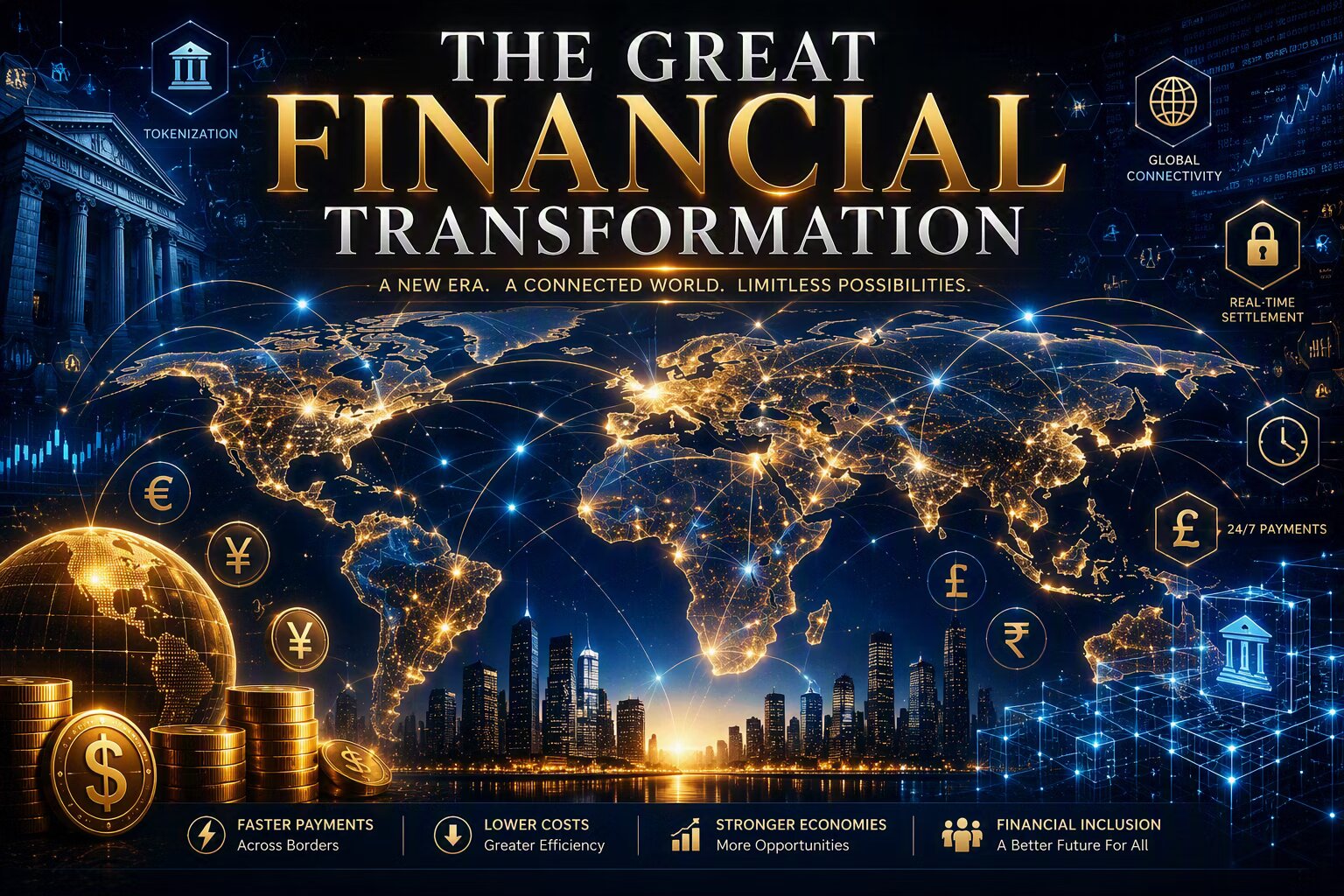
This is the story we keep coming back to, week after week — because it's the one reshaping everything else. Most people think money already moves instantly. In reality, much of the world's financial system still runs on infrastructure built decades ago. That is finally changing, region by region, and we're tracking every move.
Every region is quietly rebuilding how money moves — Brazil's PIXBrazil's instant payment system, run by its central bank. Moves money 24/7/365, free for individuals. already works at scale, the Gulf just went live on cross-border settlement, and the U.S. and Europe are modernizing what's already there. The real question isn't who wins — it's whether SWIFTThe 50-year-old global messaging network most banks still use to send cross-border payment instructions. and the BISBank for International Settlements — often called the "central bank for central banks," it coordinates global payment projects. can connect all of it into one system, or whether it splinters. Skip to any region below, or scroll for the full picture.
💡 Tap any region below to expand it
Domestic payments can take hours. International transfers can take days. Many businesses still depend on banking systems that shut down on weekends, holidays, and after business hours. Around the world, governments, central banks, and financial technology companies are building a new generation of financial infrastructure — and every region is taking a different approach.
Here's the challenge nobody talks about. If America builds tokenized deposits, Europe builds tokenized securities, Brazil runs PIX, China expands the digital yuan, and Africa launches the ECO — how do all of these systems talk to each other? Without a common framework, the world could end up with dozens of advanced payment networks that still can't easily move money across borders. That's where SWIFT and the Bank for International Settlements (BIS) come in — not creating a new currency, but building the rules that could connect the next generation of money worldwide.
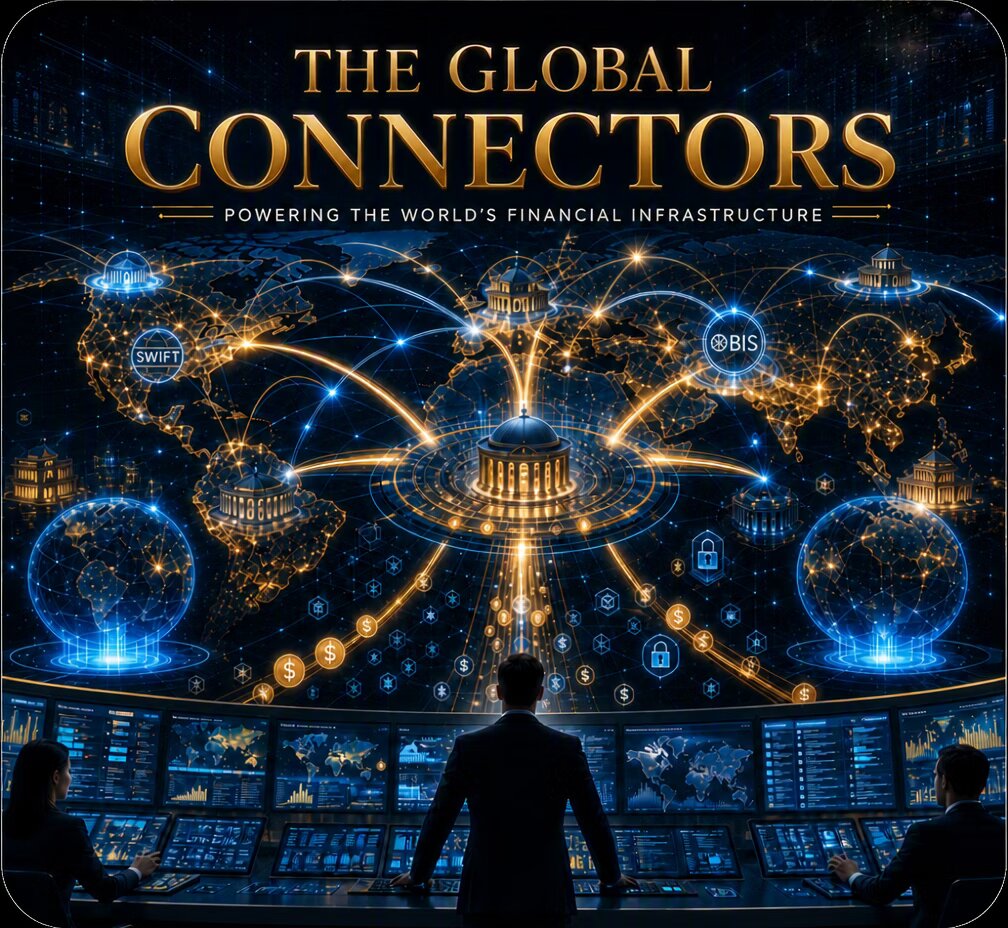
Often called the "central bank for central banks," the BISBank for International Settlements — coordinates monetary and financial cooperation between the world's central banks. is coordinating some of the world's most important payment modernization projects — including Project Agorá, testing tokenized money across borders with JPMorgan, Citi, UBS, Deutsche Bank, and more. SWIFT, the 50-year-old messaging network banks rely on, announced in July 2026 that its blockchain-based shared ledger was ready, with 17 banks across six continents preparing live pilots. Think of them as building the highways. Now let's look at the vehicles each region is putting on those roads.
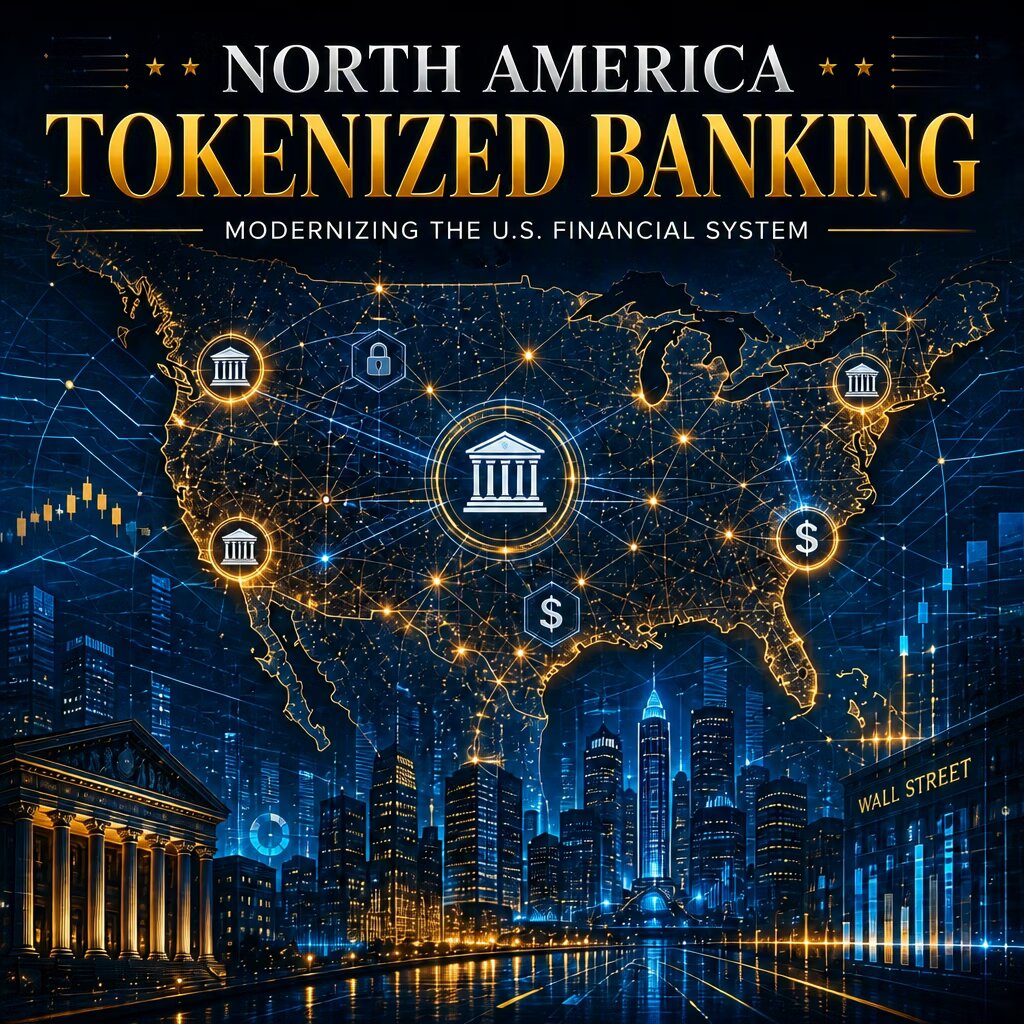
In the U.S., the focus isn't a new currency — it's modernizing the dollars already inside the banking system. Wells Fargo, JPMorgan, Citi, and Bank of America are exploring tokenized depositsOrdinary bank deposits represented on a blockchain-style ledger so they can move and settle instantly, any time of day. and blockchain settlement. Most consumers won't know it's happening — they'll just notice payments clearing faster, at any hour.
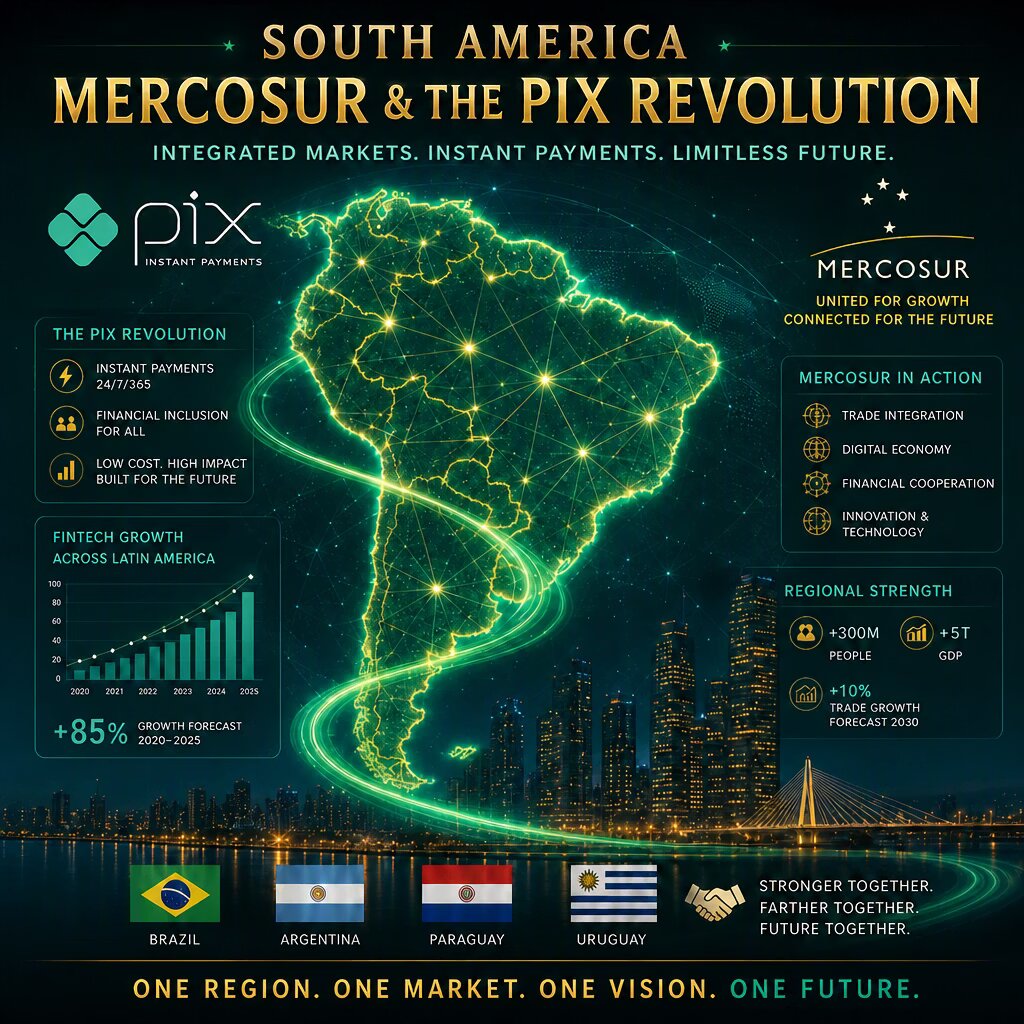
Brazil's PIXBrazil's instant payment system, run by its central bank. Moves money 24/7/365, free for individuals. is one of the most successful payment networks in modern history — instant settlement, 24/7/365, at a fraction of the old cost. Brazil isn't talking about modernization. Brazil is living it, and it's now the proof point every other region points to.
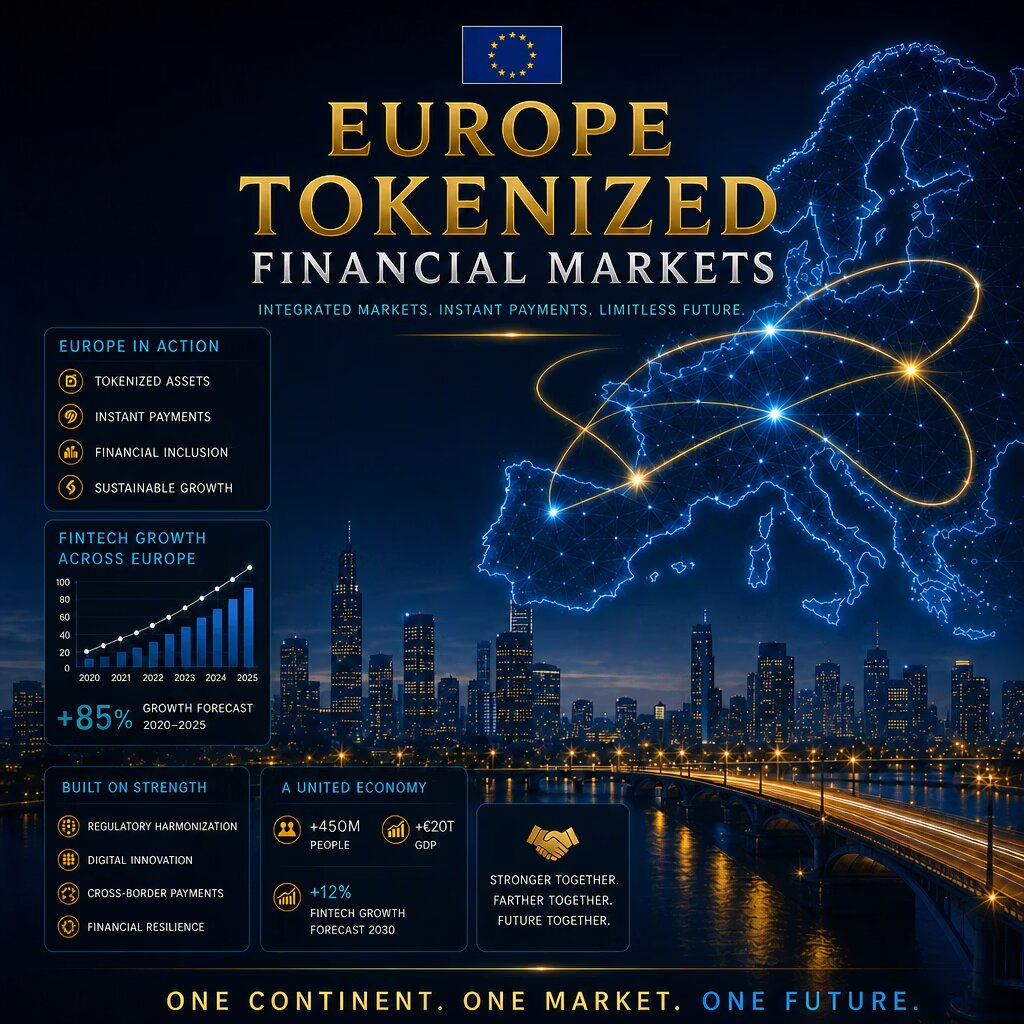
While America focuses on deposits, Europe is focused on markets — testing how bonds and securities settle on tokenized infrastructure, alongside a Digital Euro for everyday payments. Europe isn't rebuilding money itself; it's rebuilding the rails underneath it.
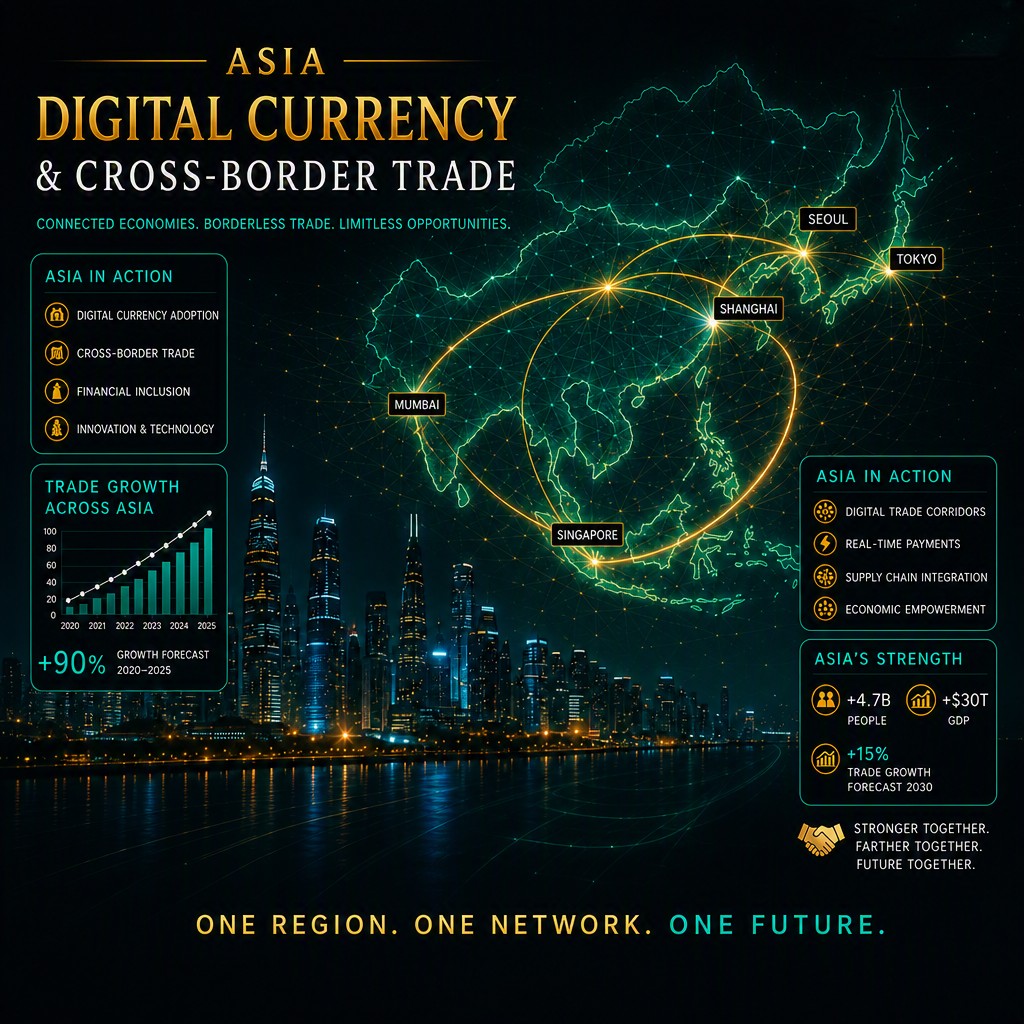
China's digital yuan is one of the largest digital-currency initiatives on Earth, and Project mBridgeA multi-country digital-currency platform linking China, Hong Kong, Thailand, the UAE, and Saudi Arabia for instant cross-border settlement. is linking China, Hong Kong, Thailand, the UAE, and Saudi Arabia for instant cross-border settlement. For the region with the world's biggest trade corridors, this isn't just digital money — it's digital trade.
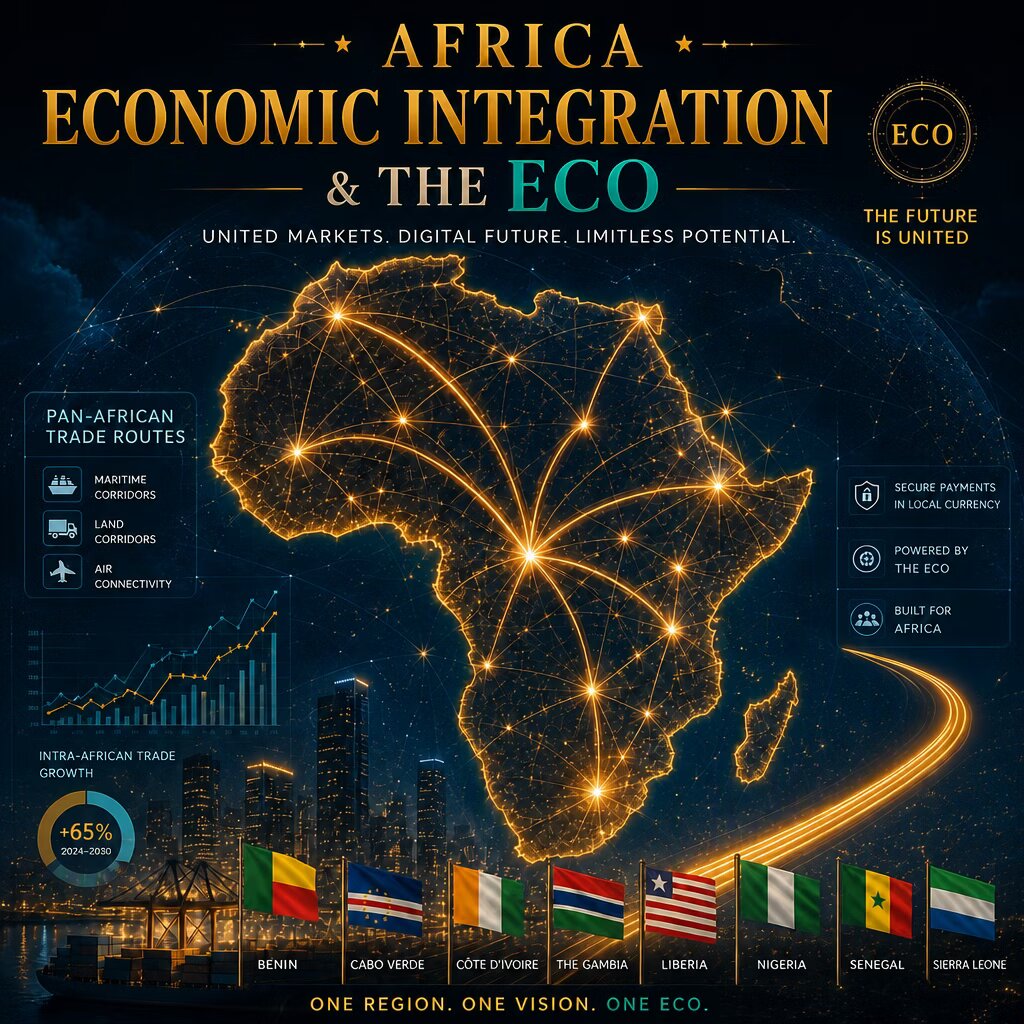
Africa's challenge is different — connecting economies that have historically run on different currencies and banking systems. The ECOWAS ECO initiative aims to strengthen regional integration. For Africa, modernization isn't just speed — it's unity.
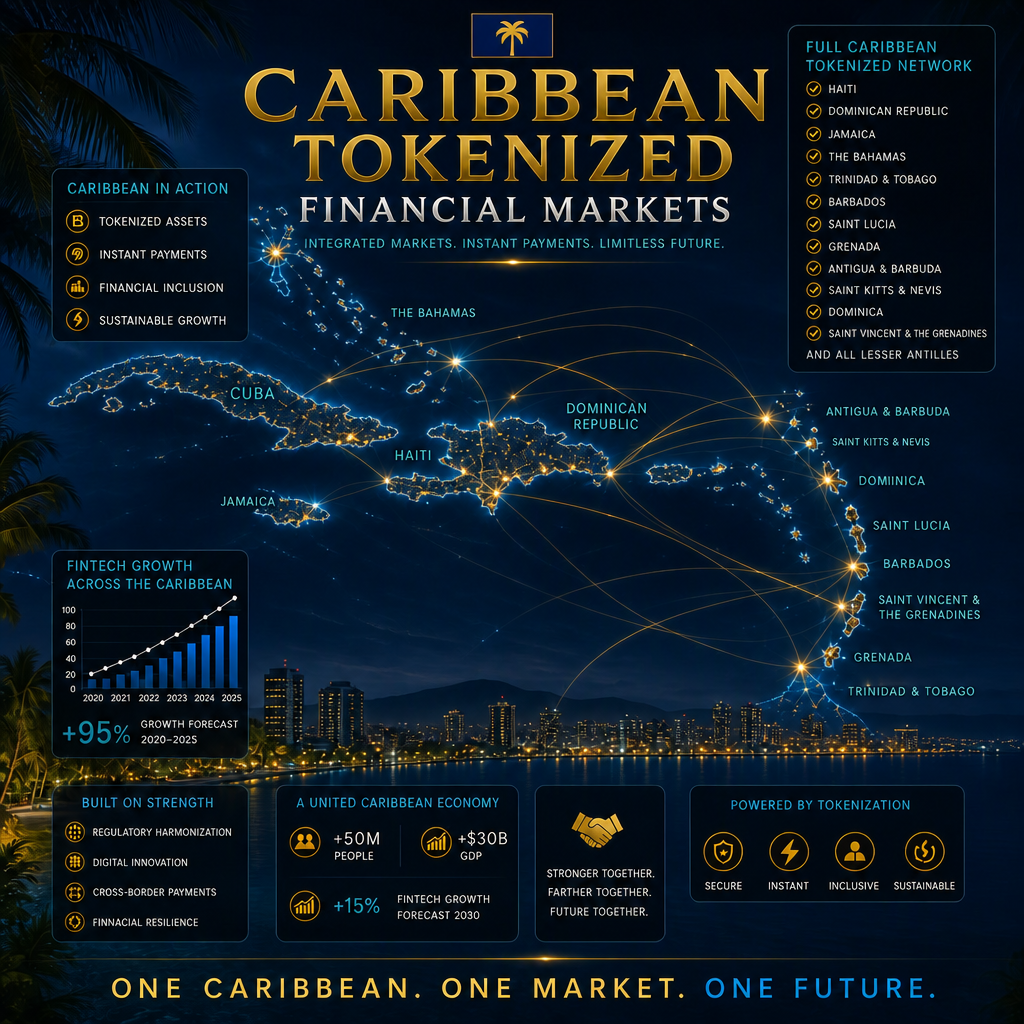
Nobody's launched more live digital currencies per capita than the Caribbean. The Bahamas' Sand Dollar (2020) was the world's first fully deployed retail CBDCCentral Bank Digital Currency — an official digital form of a country's currency, issued directly by its central bank., followed by the Eastern Caribbean's DCash and Jamaica's JAM-DEX. The lesson they're teaching the rest of the world isn't about the tech — it's that building a digital currency is the easy part. Getting people to actually use it instead of cash is the real fight; combined circulation across all three still sits under 0.2% of currency in use.
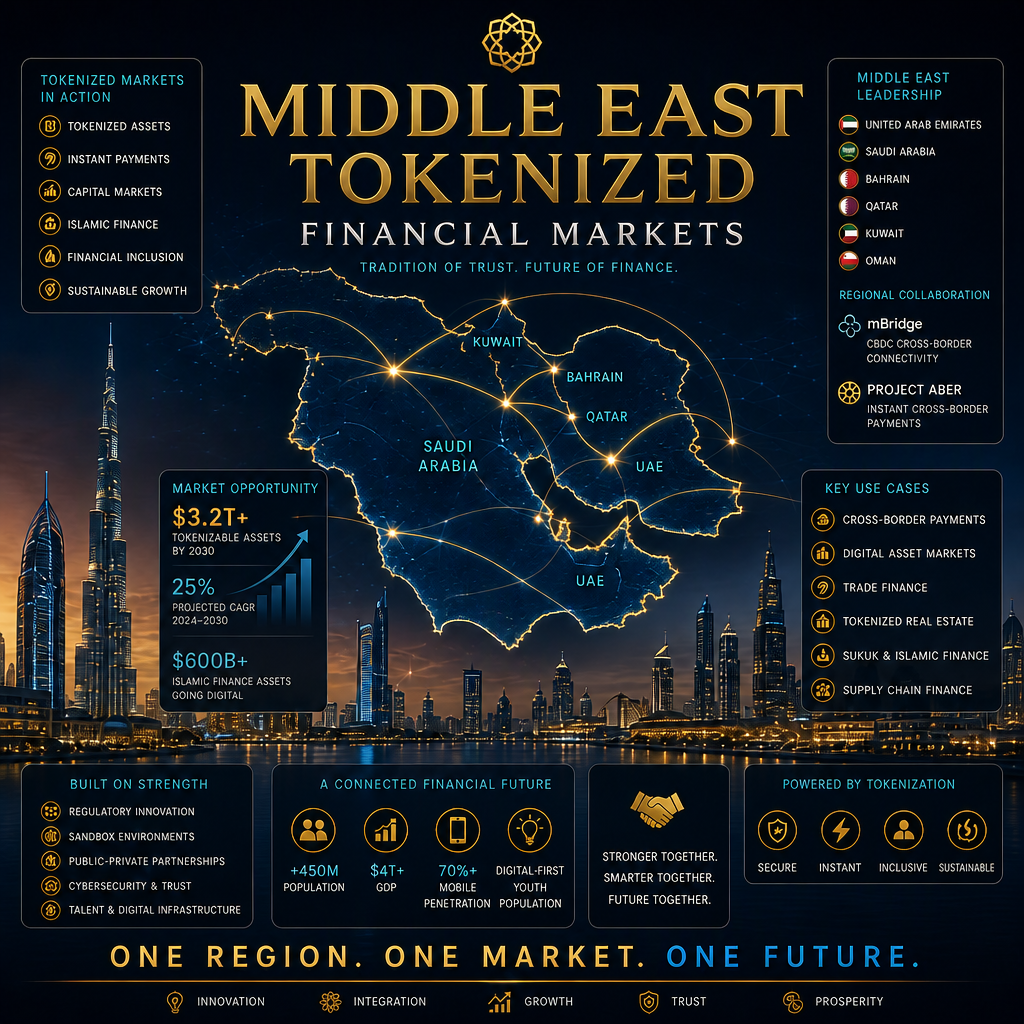
The UAE opened retail access to its Digital Dirham in March 2026 — instant peer-to-peer payments, zero-fee transfers, and live corridors into Saudi Arabia, India, and China. It's built on Project mBridgeA multi-country digital-currency platform linking China, Hong Kong, Thailand, the UAE, and Saudi Arabia for instant cross-border settlement., the cross-border settlement network the UAE co-developed with China, Hong Kong, and Thailand, with Saudi Arabia joining in 2024. Where the Caribbean is wrestling with everyday adoption, the Gulf is skipping straight to the hardest problem in payments — moving money across borders in minutes instead of days.
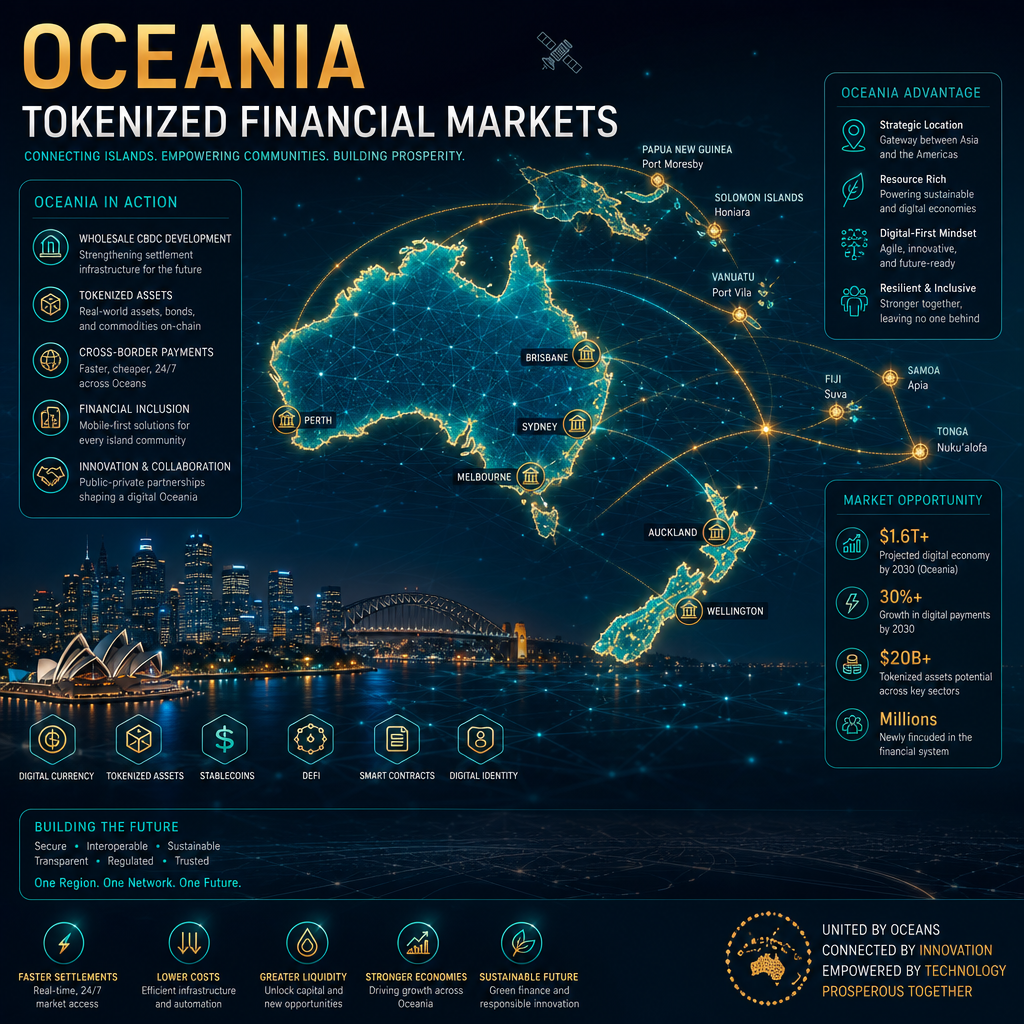
Australia and New Zealand are taking the slow road. The Reserve Bank of Australia wrapped up Project Acacia in May 2026 — 24 wholesale use cases testing tokenised assets, deposit tokens, and CBDCCentral Bank Digital Currency — an official digital form of a country's currency, issued directly by its central bank. across platforms like Hedera and R3 Corda — and folded the findings into an ongoing "future of money" research program rather than moving toward a launch. Across the Tasman, the Reserve Bank of New Zealand is still consulting on what it carefully calls "digital cash": a record 18,000 public responses showed most Kiwis are wary, with roughly 90% worried about their spending being monitored and 84% concerned physical cash could disappear. A decision on whether to proceed sits somewhere around 2026, with prototypes not expected until 2028–2029 and a possible launch near 2030. The wider Pacific is moving faster on practical inclusion instead — Fiji achieved full 24/7 interoperability between its banks and mobile wallets like M-Paisa and MyCash in 2024–2025, and island-grown apps like the Cook Islands' Smartie are spreading cashless payments across the region without waiting on a central bank digital currency at all.
The bigger picture: no single region is "winning" this race — they're each solving a different piece of the same puzzle. SWIFT and the BIS are the connective tissue that will determine whether the next generation of money actually works together, or splinters into systems that still can't talk to each other.

🥇 Gold & Markets
Why gold keeps returning to the center of the global money conversation, and what it signals about the world.

💰 Finance & Global Perspectives
Ray Dalio on how big shifts in power and debt cycles shape markets and everyday money.

🌐 Global Perspectives
A plain-English look at how the financial system actually moves behind the headlines.
Behind the newsletter
Follow Carl on Instagram to see behind the scenes.

This is just my passion.
I’m genuinely into figuring out how the world works: what’s moving in different sectors, different countries and different markets. I geek out on connecting those dots, and that’s what drives how I trade FX.
This newsletter and website are me sharing that same curiosity, week to week.
One email a week — finance, business, tech, food, health and travel, all in one dispatch. No noise, no spam, unsubscribe whenever you want.